

You could be watching MCrider videos ad-free. Find out how.
If you are an ad-free member make sure to log in to see your ad-free video.
Solomon’s Curve and Motorcycle Safety: Does Riding with the Flow Really Matter?
Ever feel like you’re either flying past traffic or everyone’s flying past you?
Back in the 1960s, researcher David Solomon studied over 10,000 crashes and came up with what’s now called Solomon’s Curve. It shows that your risk of a crash goes up the farther your speed is from the average speed of traffic — whether you’re faster or slower.
Today we’re going to explore whether Solomon’s Curve still holds up, what newer research says, and most importantly — what it means for you as a rider trying to stay safe on the road.
What Is Solomon’s Curve?
Solomon’s Curve comes from a study done in 1964 by David Solomon. He looked at over 10,000 crashes and compared the speed of each vehicle to the average speed of traffic on the same road.
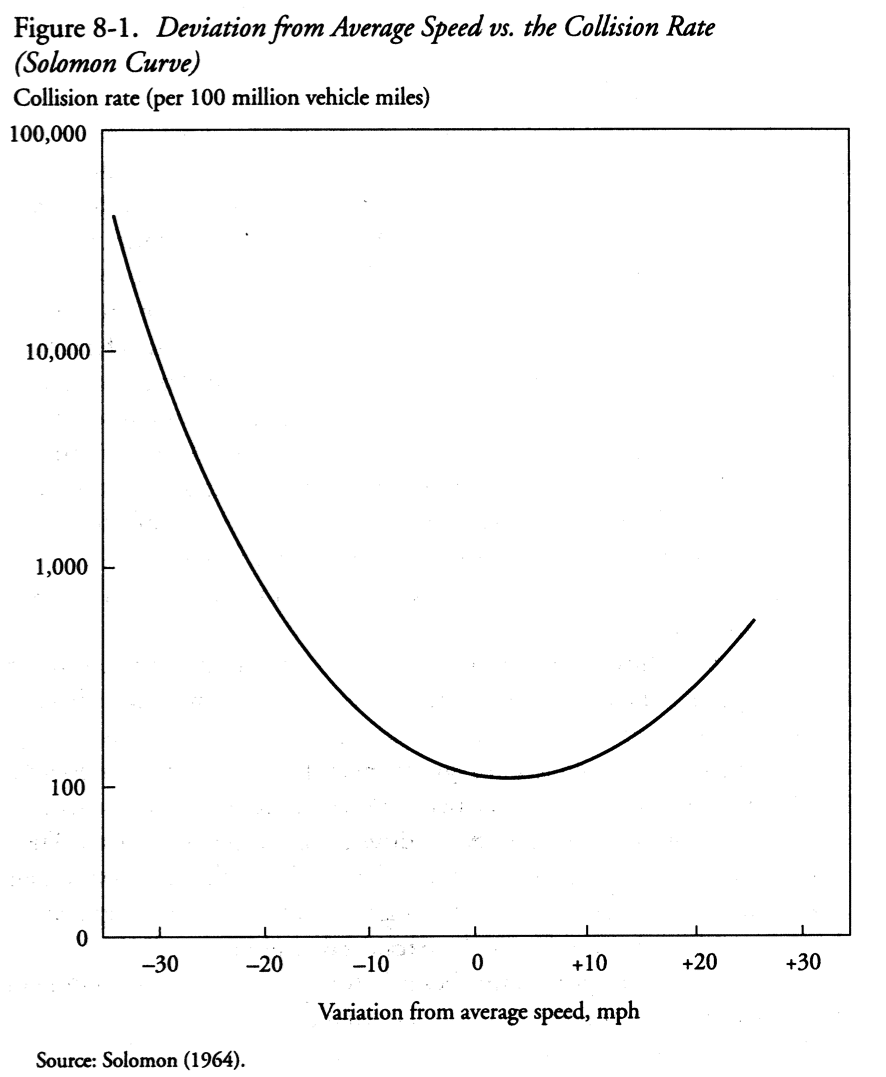
What he found was surprising — if you were right around the average speed of traffic, you were the least likely to crash. The farther your speed got from that average — either faster or slower — your crash risk increased.
When graphed, the results formed a U-shaped curve, which is why it’s often called the “crash risk curve.”
“Go with the Flow” — The Common Advice
This is where that familiar advice comes from — “ride with the flow of traffic.”
The idea is simple:
- Matching the speed of traffic reduces conflicts with other vehicles.
- Fewer conflicts typically mean a lower risk of being involved in a crash.
But like most safety research, Solomon’s work wasn’t perfect.
Criticisms of Solomon’s Curve
One of the biggest criticisms is that the study grouped together vehicles traveling slowly with those slowing down to turn.
When researchers later removed those turning vehicles from the data, the left side of the U-shaped curve flattened out. This suggested that simply riding a little slower than traffic might not be as risky as Solomon’s original curve made it look.
What Newer Research Says
Other studies over the years have confirmed key parts of Solomon’s findings, especially that going faster than traffic raises your crash risk.
However, newer research shows that riding slower than average still carries some risk — but likely not as much as Solomon’s original curve suggested.
The Big Takeaway for Riders
Most experts today agree on this:
- The farther you ride above the average speed of traffic, the higher your crash risk.
- Riding much slower than everyone else still puts you in danger, but the risk isn’t quite as bad as Solomon thought.
The safest strategy?
- Ride with the flow of traffic — but with purpose.
- Find a speed where you blend in, stay alert, and give yourself enough space to react.
That’s where motorcycle riding is both the safest and the most enjoyable.
Go Deeper: Improve Your Road Strategy
If you want to take your motorcycle safety skills to the next level, check out the MCrider Field Guide and Road Strategy books.
They’ll help you master:
- Speed management
- Lane positioning
- Road strategy and more
You can order them directly from me at MCrider.com/books or “MCrider Books” on Amazon.
Links you may be interested in:
Become a Member of MCrider
Get the Field Guide Print Edition
Order ANYTHING on Amazon and Support MCrider
Braking Tips
Entry Speed
Head & Eyes
Slow – Look – Press – Roll
Trail Braking
Following Distance
Police Skills
Riding Under the Influence
Become a Member for immediate access to the MCrider Field Guide.
Below is some gear that I ride with on a daily basis…if you are in the need of good riding gear, the products below have worked well for me.
KLIM Jacket – https://www.MCrider.com/KLIM
Shoei Motorcycle Helmets – https://www.MCrider.com/Shoei
Windshirt/Jacket Liner – https://www.MCrider.com/Liner
Lee Park Sumo Gloves – https://www.MCrider.com/LeeParks
The best source for guiding your practice session is the MCrider Field Guide.
If you are not a Member join for immediate access to the forums and Field Guide